
African women are incredibly beautiful, and their sense of style is unmatched. So elegant and powerful!
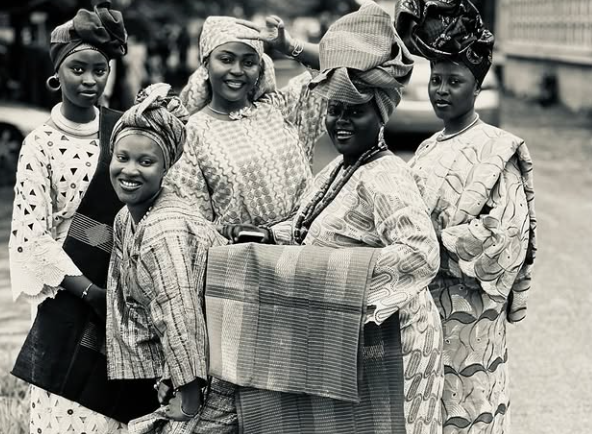
There is a magic that follows the African woman wherever she walks—a radiant energy that cannot be replicated, only admired. She is bold, she is soft, she is fire, and she is water. Her beauty is not just visual; it’s deeply spiritual, ancestral, and revolutionary.
In a world that has long tried to erase or redefine her, the African woman continues to rise—not just surviving, but shining. From the vibrant marketplaces of Accra to the luxury fashion houses of Johannesburg, from the bustling avenues of Nairobi to the historic neighborhoods of Cairo, African women are the blueprint of elegance, power, and unapologetic self-expression.
THE MELANIN MAGIC: WHERE BEAUTY RUNS DEEP
Beauty standards have long been dictated by colonial legacies and Western ideals. But African women, with their rich melanin skin tones—ranging from sun-kissed bronze to deep obsidian—have pushed back, reclaiming their beauty in every shade and form.
Today, the world is slowly awakening to what the continent has always celebrated: that there is profound beauty in Blackness.
From Lupita Nyong’o, whose red carpet presence is a masterclass in grace, to Alek Wek, whose emergence on the global stage in the ’90s shattered European beauty norms—African women have led a global redefinition of what it means to be beautiful.
But beyond the global icons are the millions of everyday African women who light up their communities with effortless charm—beauty wrapped in authenticity, not performative aesthetics.
FASHION AS CULTURE, FASHION AS RESISTANCE
For African women, style is never shallow—it is intentional. A woman’s outfit can speak louder than words, often telling stories of her roots, status, tribe, faith, or even her mood. Style is history woven into fabric.
Whether it’s:
The bold Ankara prints of Nigeria, sewn into figure-hugging gowns or modern two-pieces,
The Kente cloth of Ghana, traditionally worn by royalty but now reimagined for weddings, graduations, and high fashion,
The Xhosa beadwork and skirts of South Africa, each bead color conveying a message,
Or the intricate Henna designs worn by women in Northern Nigeria, Sudan, and Somalia,
African women wear their heritage as art.
In places like Lagos, Nairobi, and Dakar, street fashion is as dynamic as high fashion. Designers like Rich Mnisi, Imane Ayissi, and Taibo Bacar are not just making clothes—they’re shaping cultural movements.
But it’s the women in the streets—the ones combining vintage blazers with gele, pairing Jordan sneakers with wax print skirts—who truly lead the fashion revolution. They are the muse and the movement.
THE HAIR, THE CROWN
Hair has always been sacred in African culture. And for African women, hair is more than just a style—it is resistance, creativity, freedom.
In a world where natural Black hair has often been deemed “unprofessional” or “untidy,” African women have turned their crowns into symbols of rebellion and pride.
Braids tell stories—some tribal, some trendy.
Afros reclaim space—loud, soft, and political.
Cornrows, bantu knots, twists, locs, and shaved heads—every style is a choice, a statement, a tradition revived.
In cities like Addis Ababa or Kampala, hair salons are sanctuaries—places where stories are shared, confidence is restored, and beauty is celebrated.
STYLE MEETS POWER
What makes African women truly unmatched isn’t just their looks—it’s the power they carry in their presence.
Take Ngozi Okonjo-Iweala, Nigeria’s powerhouse economist and the first woman and African to lead the World Trade Organization. Or Wangari Maathai, the late Kenyan Nobel Peace Prize winner who championed environmental justice. Or Amina J. Mohammed, Deputy Secretary-General of the United Nations.
These women do not just wear beauty—they wear brilliance. Their elegance is not only in their attire but in how they move through rooms that weren’t built for them, and take up space without apology.
GEN Z & THE RISE OF DIGITAL STYLE ICONS
In the age of Instagram, TikTok, and YouTube, a new generation of African women are leading the charge—combining digital influence with cultural pride.
Creators like:
@Tiwa_theTailor in Nigeria, who blends vintage African styles with Gen Z cool,
@Amaarae, a Ghanaian artist whose looks are as bold as her music,
@ElsaMajimbo, whose comedic brilliance is matched by her daring fashion sense,
are using the internet not just to express themselves, but to reclaim African narratives from the hands of mainstream fashion and media.
THE FUTURE IS FEMALE, AFRICAN, AND FIERCE
To be an African woman today is to be many things at once—traditional and modern, soft and strong, bold and reserved. And yet, in all her forms, she remains unmistakably herself.
Her beauty is not just seen—it is felt.
Her style does not follow trends—it sets them.
Her elegance is not a performance—it is a birthright.
So the next time someone asks what power looks like, tell them: it looks like an African woman in her element—walking confidently in her wrapper and heels, braids swaying, head high, eyes forward.
To every African woman reading this:
The world sees you now. But even when it didn’t, you shined anyway.
Keep shining. The future is yours — and you’re wearing it well. ✨