
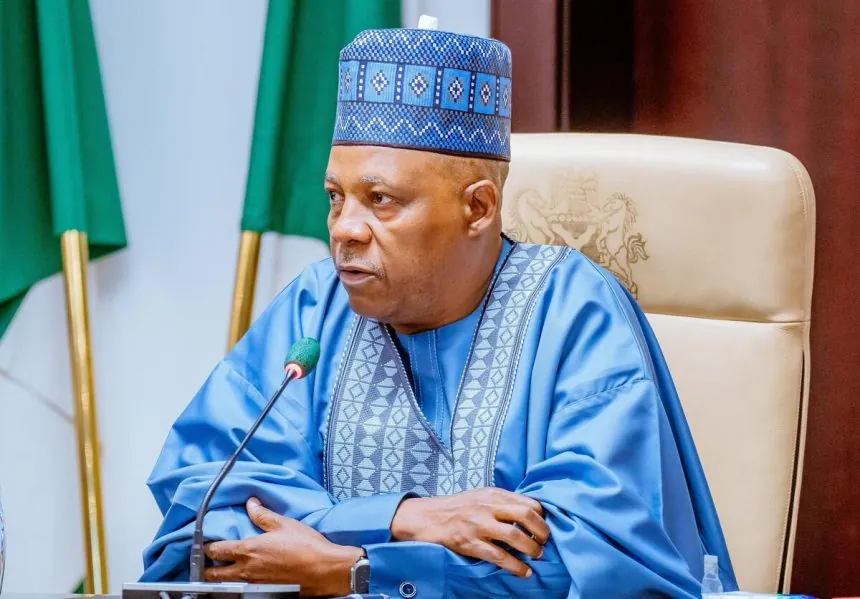
Nigeria’s Vice President Kashim Shettima has issued a strong call for coordinated national efforts to combat malnutrition across the country, warning that the rising rates of child stunting, wasting, and micronutrient deficiencies pose a grave threat to national development, economic productivity, and future leadership.
Speaking at the National Nutrition Summit held in Abuja, Shettima emphasized the need for federal, state, and local governments to collaborate with private sector partners, international donors, and civil society organizations to develop sustainable nutrition strategies that go beyond emergency food programs.
“Malnutrition is not just a humanitarian issue — it is a development crisis,” Shettima said. “No nation can prosper when its children are undernourished, its mothers are anemic, and its schools are filled with hungry minds.”
The Crisis in Numbers
According to the latest National Demographic and Health Survey (NDHS) and UNICEF reports:
1 in 3 Nigerian children under 5 is stunted due to chronic malnutrition.
Over 2 million children suffer from severe acute malnutrition annually.
Maternal malnutrition and iron-deficiency anemia remain high, particularly in rural and conflict-affected areas.
Nigeria loses an estimated $1.5 billion annually in productivity due to poor nutrition.
States in the North-East and North-West are particularly hard-hit, due to a combination of poverty, insecurity, displacement, and weak health infrastructure.
A Whole-of-Government, Whole-of-Society Approach
Vice President Shettima stressed that addressing malnutrition requires multi-sectoral collaboration, involving:
Agriculture – to improve food diversity and local production
Health – to strengthen maternal and child health services
Education – to integrate nutrition awareness into school programs
Social protection – to support vulnerable households through food subsidies, conditional cash transfers, and school feeding schemes
He also encouraged state governors to take ownership of nutrition policy implementation and urged ministries to break bureaucratic silos and coordinate efforts more efficiently.
Donor Agencies and Stakeholder Commitments
The summit witnessed renewed commitments from development partners, including:
UNICEF, which pledged technical support and scaling up of Ready-to-Use Therapeutic Food (RUTF) supply.
USAID and the World Bank, who promised further investment in community health programs targeting maternal and child nutrition.
Nestlé Nigeria and Dangote Foundation, who presented plans to support biofortification and micronutrient fortification in staple foods.
Moving from Policy to Action
In a passionate appeal, Shettima warned against what he described as “a culture of policy inertia” — where well-crafted strategies are shelved or poorly implemented.
“We have no shortage of policies or plans. What we need is urgency, accountability, and results,” he said. “Every child saved from malnutrition today is a future scientist, leader, or entrepreneur. We cannot afford to fail.”
The Vice President concluded by calling for annual state-level nutrition scorecards to monitor progress and identify areas needing intervention.
Vice President Shettima’s remarks mark a turning point in Nigeria’s battle against malnutrition, signaling that nutrition is now being treated as a national priority, not just a sectoral concern. The real test, however, will lie in execution, political will, and long-term commitment.
As Nigeria works to meet its Sustainable Development Goals (SDGs) and achieve zero hunger by 2030, the next few years will be critical in determining whether the country can move from being a global hotspot of malnutrition — to a model of nutritional resilience and equity.