
A Red State Reckons with Trump’s 'Big, Beautiful Bill'
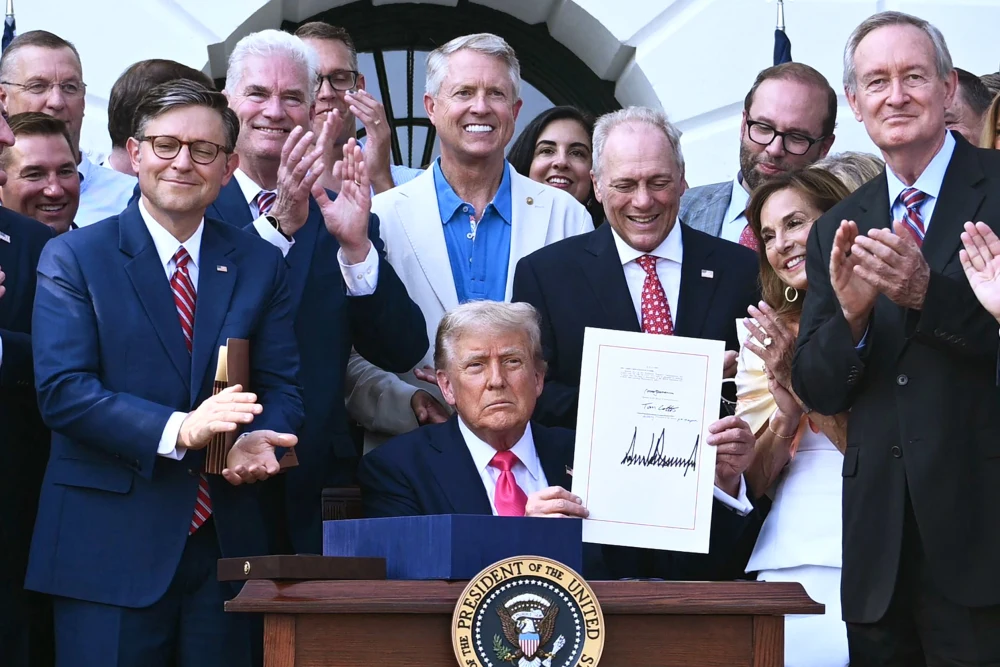
In the heart of Republican America, political tensions are flaring as one red state finds itself grappling with the financial and social fallout of former President Donald Trump’s much-touted “big, beautiful bill.” Once a symbol of conservative pride and patriotic ambition, the legislation — passed during Trump’s final year in office — is now under intense scrutiny as residents, lawmakers, and policy experts face its real-world consequences.
The Origins of the Bill
Marketed as a sweeping package of economic relief, infrastructure reform, and immigration control, the bill was passed in 2024 amid intense partisanship and national division. Dubbed the “big, beautiful bill” by Trump during his campaign-style rallies, it promised to “restore American greatness” by:
-
Funding border infrastructure
-
Slashing taxes for middle-class families
-
Revitalizing rural manufacturing
-
Curtailing federal regulation in red states
Supporters in conservative-led states celebrated it as a return to America-first policies. But now, over a year later, the bill’s broad and often vague provisions are producing unexpected results — especially in states like Arkansas, Missouri, and South Carolina, where rural economies and state budgets are stretched thin.
Economic Strain and Unintended Consequences
Despite its promise of economic rejuvenation, several key features of the bill are backfiring:
-
Federal Funding Reductions: The bill redirected federal support for public health, education, and housing — with the expectation that private investment would fill the gap. That hasn’t materialized. Rural hospitals are closing. Teacher layoffs are increasing. Low-income housing projects are stalled.
-
Border Security Spending Overruns: The bill allocated nearly $18 billion for border wall construction and surveillance, diverting funds from agriculture and infrastructure grants. Critics argue that the wall — extended only marginally — has delivered minimal security impact but maximum budget strain.
-
Tax Cuts, But For Whom? While middle-income families saw modest relief, the biggest benefits went to corporations and top earners, leading to growing resentment among small business owners and working-class conservatives.
Political Fallout in Trump Country
Local GOP lawmakers are divided. Some remain loyal to Trump and defend the bill as a “long-term investment,” while others are quietly voicing frustration about the lack of federal support for crumbling infrastructure and rising healthcare costs.
In Missouri, Governor Mark Edgerton — a Trump ally — admitted during a press conference,
“The bill delivered some good things, but it left us holding the bag on key services we can’t afford to lose.”
Meanwhile, progressive organizers and independent candidates in these red states are gaining traction by pointing out the disconnect between Trump-era promises and lived realities. Rural town hall meetings have grown increasingly heated, with constituents demanding answers.
A Case Study in Political Messaging vs. Policy Impact
Analysts argue that this moment represents a turning point in how red-state voters perceive Trump-era populism. The “big, beautiful bill” may have succeeded as a rhetorical device — bold, patriotic, and broad enough to rally support — but failed to deliver sustainable policy results on the ground.
According to Dr. Alicia Montero, a public policy expert at Georgetown University:
“This is what happens when legislation is driven by optics, not evidence. You get applause lines, not real reform.”
The reckoning with Trump’s “big, beautiful bill” is more than just an economic issue — it’s a political identity crisis in parts of the country that once formed the bedrock of his support. As the 2026 midterms approach, candidates from both sides will be forced to address whether symbolic politics still work when the promises behind them start to unravel.