
Seun Kuti Sparks Controversy Over Remarks on Buhari’s Death
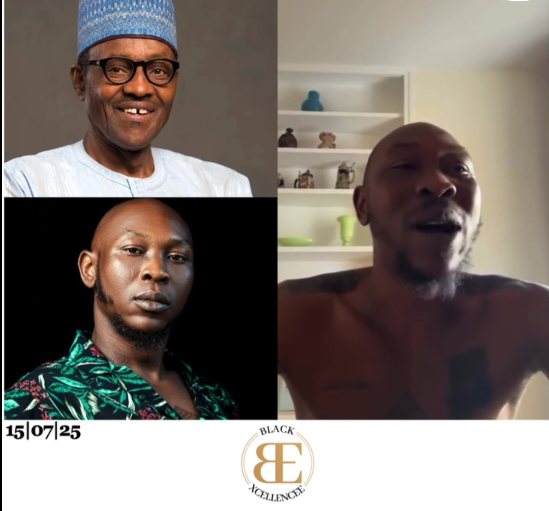
Nigerian afrobeat artist and activist, Seun Kuti, has ignited widespread reactions following his blunt remarks on the passing of former President Muhammadu Buhari, who died earlier this week at the age of 82. Seun, known for his fearless political commentary, stated in a live broadcast and social media post that Buhari’s death should not be mourned, but rather marked as a reminder of decades of suffering endured by ordinary Nigerians under his leadership.
“He died after achieving everything he wanted on our backs,” Seun declared. “We, the people, gave our sweat, tears, and lives while he and his children reaped the reward.” His comment quickly went viral and sparked both strong condemnation and support, reigniting the polarizing debate around Buhari’s legacy.
Buhari, who first ruled Nigeria as a military dictator in the 1980s before returning as a democratically elected president in 2015, left behind a mixed legacy. While some remember his stance on anti-corruption and infrastructure, many Nigerians—especially the youth—associate his time in power with widespread hardship, economic decline, increased poverty, and a clampdown on civil rights.
Seun Kuti, the youngest son of legendary afrobeat pioneer Fela Kuti, accused Buhari of escaping accountability for the damage he caused. “He was never charged to court for all his crimes,” he said. “Dying at old age isn’t justice. It’s comfort. It’s privilege. It’s a kind of freedom most Nigerians will never know.” He added that Buhari’s children and grandchildren would continue to enjoy the wealth and access that came from his decades in power, while millions of Nigerians remain in generational poverty.
The remarks triggered immediate reactions across social media, with many Nigerians echoing Seun’s frustration. Others criticized him for what they saw as an “insensitive” attack on the dead. However, his supporters argue that Seun merely voiced what many people have felt silently — that the Nigerian system continues to protect the powerful and punish the poor.
The government has announced a state burial for Buhari, and tributes have poured in from foreign and local dignitaries. Yet, for many, these official gestures seem disconnected from their lived reality under his rule. During his tenure, inflation soared, insecurity deepened, and public trust in governance continued to erode.
Seun’s statement has now become a flashpoint in a larger national conversation about leadership, justice, and historical memory. To many young Nigerians, Buhari’s death without any form of accountability reinforces the belief that justice in Nigeria is reserved only for the powerless.
While tributes are being paid in formal quarters, many citizens are using this moment to call for truth, documentation, and transparency in Nigeria’s political history — no matter how uncomfortable it may be.